What actually moves a person to act? Nearly every theory of motivation eventually circles back to this single question. Whether one turns to Clayton Alderfer's ERG theory, Frederick Herzberg's two-factor theory, or David McClelland's theory of achievement motivation, their underlying frameworks trace back, in large part, to Abraham Maslow's hierarchy of needs[i].
If we want to understand people—and especially if we want to lead them well—it is worth returning to this old and familiar subject of need. This essay follows Maslow's theory of needs to examine the structure of human motivation, and considers what that structure might mean for the practice of leadership.
1. Need and Happiness
1) Deficiency Needs and Growth Needs
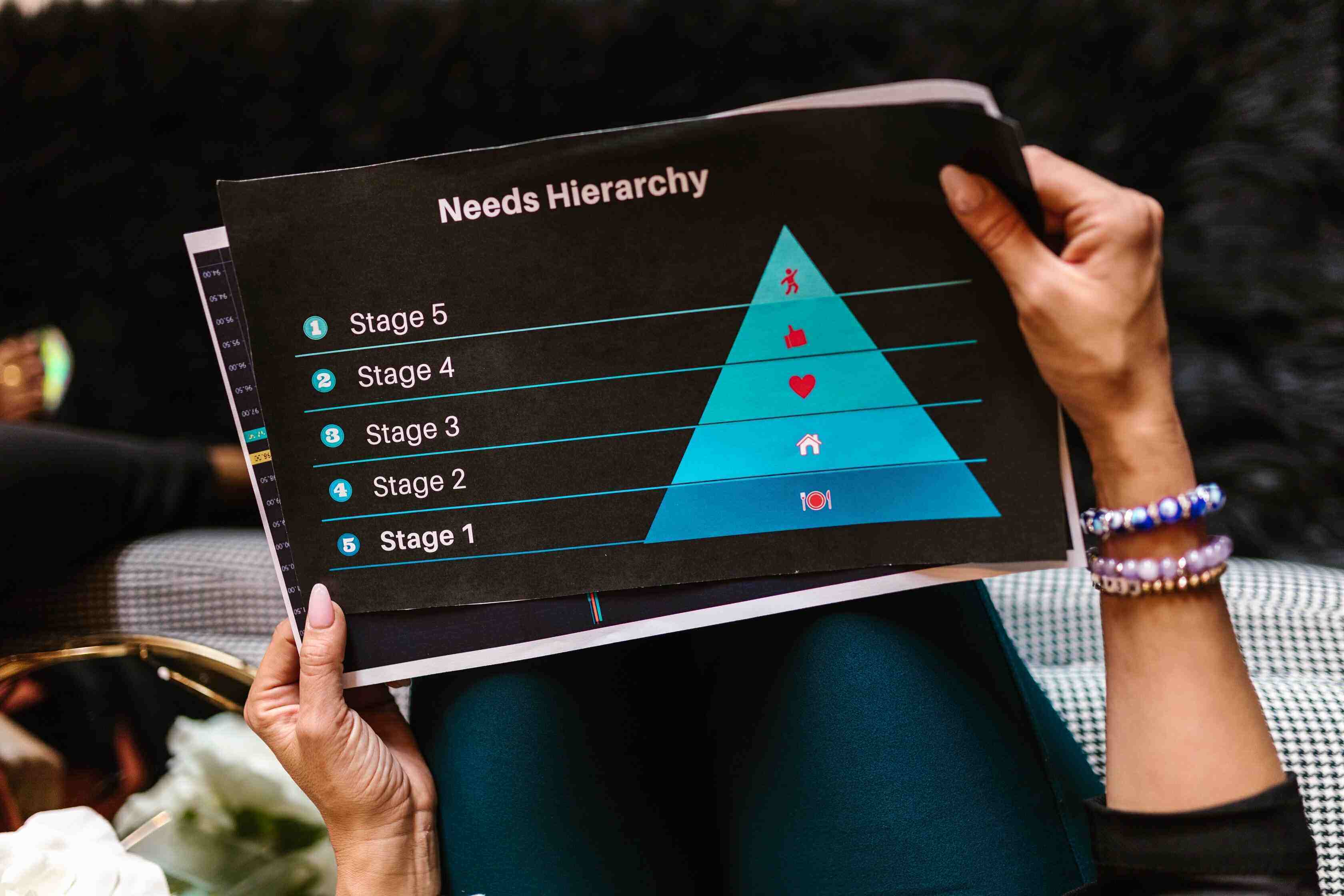
In his landmark 1943 paper, “A Theory of Human Motivation,” Maslow divided human needs into five levels: physiological needs, safety needs, love and belonging, esteem, and self-actualization[ii]. Later, in the 1970 revised edition of Motivation and Personality and in his final writings, he inserted cognitive and aesthetic needs between esteem and self-actualization, and proposed a still higher need beyond self-actualization—self-transcendence—expanding the hierarchy to eight levels in all[iii].
These eight levels fall into two broad families. The lower four—from physiological need through esteem—are called deficiency needs: the pleasure that comes from filling a lack. The upper four—from cognitive need through self-transcendence—are called growth needs: these are bound up with meaning rather than mere satisfaction. In the end, human beings live along two axes at once, pleasure and meaning.
A verse from the Gospel of Matthew seems to have anticipated this long before Maslow: “Man shall not live by bread alone, but by every word that proceedeth out of the mouth of God” (Matthew 4:4). If bread stands for the happiness deficiency needs provide, then the word of God stands for the happiness growth needs provide—and no one lives on either alone.
2) The Limits of Deficiency Needs
Deficiency needs and growth needs are the two pillars of human motivation, but a crucial difference separates them. Deficiency needs obey the law of diminishing marginal utility: once a need has been satisfied to some degree, each further increment of satisfaction yields noticeably less pleasure. The first bite of bread, eaten while genuinely hungry, is deeply satisfying; the second and third bites rarely deliver the same thrill.
The writer of Ecclesiastes made much the same observation long ago: “He that loveth silver shall not be satisfied with silver; nor he that loveth abundance with increase: this is also vanity” (Ecclesiastes 5:10). No matter how thoroughly they are filled, deficiency needs never lead to a lasting sense of enough. That is their fundamental limitation.
3) The Inexhaustibility of Growth Needs
Growth needs, by contrast, escape this law entirely. Maslow himself observed that growth needs tend to intensify, rather than diminish, the more they are satisfied[iv]. Had human beings possessed only deficiency needs, life would have had nowhere left to go the moment those needs were met; direction and purpose would have evaporated. But there is, embedded within us, a longing for growth that can never be fully satisfied—and it is precisely this trait that keeps human beings from lapsing into boredom, driving us to keep searching for meaning.
Ecclesiastes puts it this way: “He hath made every thing beautiful in his time: also he hath set the world in their heart” (Ecclesiastes 3:11)—or, as it is sometimes rendered, he has set eternity in the human heart. Even the finest things grow stale when they remain confined to the register of deficiency; it is the growth need, inexhaustible by nature, that allows life to keep moving toward meaning.
2. How Should a Leader Attend to Need?
Need is both the reason people live and the engine that moves them to act. A leader, then, must learn to read the needs of those they lead with real care. The needs a leader will encounter can be sorted into roughly five kinds.
1) The Need to Be Acknowledged
There seem to be three layers to how we respond to other people. The most common is to react to behavior itself—responding directly to what someone does—and this is precisely what tends to breed conflict. Pointing out behavior we don't understand, or reacting to it on the spot, quickly stiffens a relationship. A subtler layer is to attend to the other person's feelings; the most mature layer is to look further still, to the need underlying both the feeling and the behavior.
Behavior varies endlessly from person to person, but the needs that drive it are, at bottom, shared by everyone. It is only when we meet someone at the level of need that real understanding and empathy become possible. The story of the Samaritan woman in the Gospel of John illustrates this well. Jesus did not point out or rebuke the behavior of a woman who had been married many times over. Instead, he named the unmet longing beneath it: “Whosoever drinketh of this water shall thirst again: but whosoever drinketh of the water that I shall give him shall never thirst” (John 4:13–14).
That brief exchange turned her whole life around—not because her behavior was corrected, but because the need beneath it was seen and acknowledged. The same holds for leaders. Rather than wrestling with a person's behavior, a leader who can perceive the unmet need beneath it is the one who builds real trust.
2) The Need to Be Met
Second is the need that must be met. Before asking people to work toward the leader's own goals, a leader must first take the trouble to see what people actually need, and become someone who meets it. No leader can, or should try to, satisfy every need a person has. But there are needs a person hopes their leader will meet, and needs a leader is genuinely able to meet—and discerning the difference, then meeting what can rightly be met, is central to the work of leadership.
Ellen White summarized Christ's own pattern of ministry this way: “He showed His sympathy for them, ministered to their needs, and won their confidence. Then He bade them, ‘Follow Me’”[v]. Trust, it seems, always precedes the ask. Meeting a need comes first; the call to follow comes after.
3) The Need to Be Awakened
Third is the need that must be awakened. What moves a person, in the end, is need itself. Without it, people grow listless, and motivation never appears. Hunger has to exist before someone will eat; thirst has to exist before someone will drink. There is an old saying that you can lead a horse to water but cannot make it drink—yet feed the horse salt, and thirst appears on its own, and the horse walks to the water unprompted.
In the same way, drawing out a given behavior first requires that the underlying need be alive. A leader has to be able to sense which needs in a person have gone dormant, and which ones must be reawakened to draw out the behavior that's wanted. The church at Laodicea, in the book of Revelation, is a striking case of exactly this kind of dormancy: “Because thou sayest, I am rich, and increased with goods, and need nothing; and knowest not that thou art wretched, and miserable, and poor, and blind, and naked” (Revelation 3:17).
The message to Laodicea is, at its core, a call to abandon the illusion of self-sufficiency and rediscover a longing that has quietly died. Steve Jobs is often remembered for making a related point: that people rarely know what they want until it is placed in front of them. A leader's task, in this light, is to name a need before the person themselves has fully recognized it—and in doing so, to awaken the longing that follows.
4) The Need to Be Exchanged
Fourth is the need that must be exchanged. This is the very premise on which transactional leadership theory rests[vi]. A leader has needs of their own, and so does every member of a team. A healthy exchange takes shape when the leader's need can only be met by the follower, and the follower's need can only be met by the leader—when a leader wants diligent work and a follower wants fair reward, the relationship naturally interlocks.
The story of the rich young ruler shows how far this logic of exchange can reach. To a man seeking eternal life, Jesus answered: “Yet lackest thou one thing: sell all that thou hast, and distribute unto the poor, and thou shalt have treasure in heaven: and come, follow me” (Luke 18:18, 22). Aligning what someone else wants with what we want is not always a small transaction; sometimes it asks for a decision that touches the whole of a life.
5) The Need to Be Elevated
Last, need must be allowed to grow into something higher. In the feeding of the five thousand, Jesus met the crowd's very real, physical hunger—but what he hoped for was that they would not stop there. “Verily, verily, I say unto you, Ye seek me, not because ye saw the miracles, but because ye did eat of the loaves, and were filled. Labour not for the meat which perisheth, but for that meat which endureth unto everlasting life” (John 6:26–27).
Being filled, in other words, was never meant to be a destination—only a threshold opening onto a larger longing. Maslow's hierarchy makes a similar claim: once a lower need is reasonably satisfied, a higher one begins to stir[vii]. Need is not meant to sit still. Like water spilling from an upper reservoir into the one below it, it should keep moving upward. A leader, then, should not be satisfied merely with meeting the needs directly in front of them, but should keep asking how those needs might grow into something of a higher order.
Conclusion
Need is perhaps the most honest window we have into another person, and it is, in the end, what leadership must learn to work with. Maslow's distinction between deficiency needs and growth needs reveals that human beings live along two axes at once—pleasure and meaning—and this picture resonates deeply with the understanding of human nature the Bible has offered all along.
A leader is called to recognize the needs behind a person's behavior, to discern and meet the needs that can rightly be met, to awaken needs that have gone dormant, to build a healthy exchange of needs between leader and follower, and, ultimately, to help those needs grow toward something higher. This careful, sustained attention to need is, perhaps, the very heart of a leadership that brings people to life and sets them in motion.
Notes
[i]Clayton P. Alderfer, "An Empirical Test of a New Theory of Human Needs," Organizational Behavior and Human Performance 4, no. 2 (1969): 142–175; Frederick Herzberg, Bernard Mausner, and Barbara Snyderman, The Motivation to Work (New York: Wiley, 1959); David C. McClelland, The Achieving Society (Princeton, NJ: Van Nostrand, 1961).
[ii]Abraham H. Maslow, "A Theory of Human Motivation," Psychological Review 50, no. 4 (1943): 370–396.
[iii]Abraham H. Maslow, Motivation and Personality, 3rd ed. (New York: Harper & Row, 1970); Edward Hoffman, ed., Future Visions: The Unpublished Papers of Abraham Maslow (Thousand Oaks, CA: Sage, 1996).
[iv]Maslow, Motivation and Personality, pt. 2, "Growth and Motivation."
[v]Ellen G. White, The Ministry of Healing, 143.
[vi]Bernard M. Bass, Leadership and Performance beyond Expectations (New York: Free Press, 1985).
[vii]Maslow, "A Theory of Human Motivation," 394.


