In modern society, "personal development" is often reduced to a mere tool for boosting market value or maximizing workplace productivity. However, from the perspective of Mind Management—which fundamentally governs our inner self and psychological well-being—cultivating the intellect goes far beyond building a resume.
Among the three core pillars of human personality—Intellect, Emotion, and Will—the intellect serves as the primary gateway through which we perceive the external world and discern truth.
To elevate the quality of our inner life, we must engage in high-level management of our cognitive faculties. This article explores the ultimate purpose of intellectual development and the advanced principles of cognitive growth through both psychological and wisdom-based lenses.
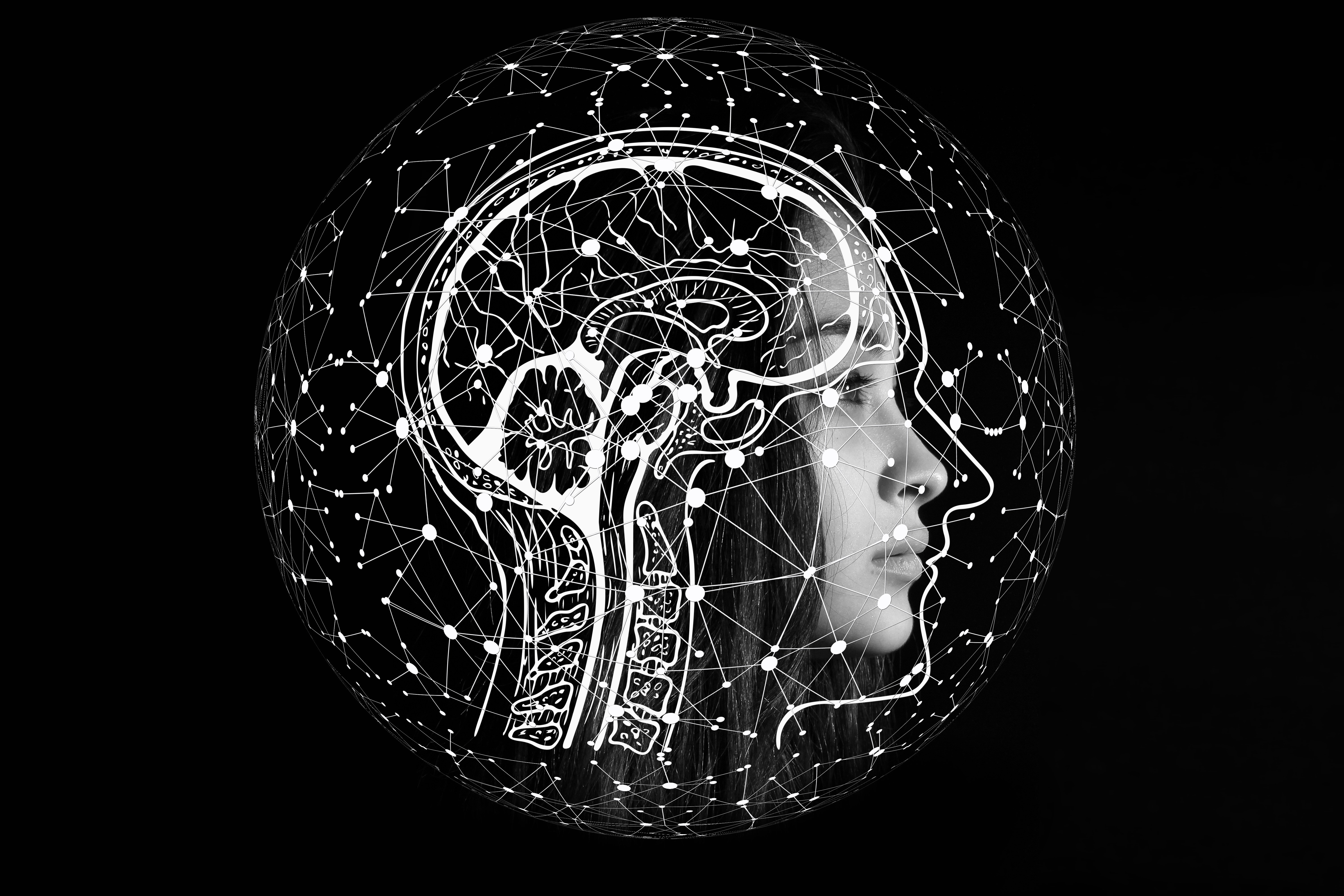
1. The Ultimate Purpose of Intellectual Development: Why Manage the Intellect?
Human intelligence and our capacity for deep thought are not merely evolutionary tools designed for physical survival. The ultimate destination of our mind lies in connecting with a higher dimension of reality, moving beyond the visible, material world.
1) A Sublime Encounter Between Intellects
At its core, the Creator is the ultimate intellectual Being, and humans were designed as intellectual beings to match. Therefore, communion with the Divine is not a vague, mystical trance; it is a profound encounter between the Supreme Intellect and human intellect.
While love is frequently dismissed as a purely emotional realm, true love matures only within the sphere of intellectual connection—where we comprehend the deeper thoughts, values, and intentions of another. The neural networks of the human brain are precisely the medium designed for this high-level communion.
2) Meeting the Invisible Through the Visible
The spiritual source of this universe remains invisible to our physical eyes. Consequently, we can only engage with this invisible wisdom through the tangible, visible creation around us. The vast order of the cosmos and the intricate complexity of the microscopic world reflect a divine intellect. When we observe and deeply investigate the mysteries of creation, we come face-to-face with the infinite intelligence working behind the scenes, sparking a profound sense of wonder.
3) The Essence of Worship and Intellectual Depth
True worship is a natural human reaction to witnessing something magnificent and awe-inspiring. Therefore, as our intellect deepens, we discover more mysteries hidden within the world, and the depth of our awe increases accordingly. A shallow intellect inevitably leads to a shallow capacity for wonder.
4) Encountering Absolute Intelligence at the End of Truth
No matter what field of study we pursue—be it physics, neuroscience, mathematics, or the humanities—if we pursue it with an authentic desire to reach ultimate truth, we inevitably encounter the source of all intelligence. We must manage and elevate our intellect to transcend ignorance, ensuring we can fully grasp reality at the destination of our pursuit.
2. Three Advanced Principles of Intellectual Growth
How, then, does this crucial intellect expand and develop? Moving past simple rote memorization, the actual mechanism that creates cognitive friction and expands the mind operates on three principles:
1) "Hard Thinking"—Creating Resistance, Like Tearing Muscle Fibers
The principle of physical muscle growth offers a powerful analogy. Lifting a heavy barbell ten times is far more effective for muscle hypertrophy than lifting a light dumbbell a hundred times. When the body endures heavy resistance, microscopic tears occur in the muscle tissue. The body then repairs these fibers to be denser and stronger through a process called overcompensation.
The brain develops in the same way. Reading familiar, comfortable texts or engaging in passive, routine thinking does absolutely nothing for cognitive expansion. "Hard Thinking"—the deliberate act of placing friction and tension on the brain—is the only key to true intellectual growth. When the mind wrestles with complex concepts and experiences intellectual resistance, the brain remodels itself into a highly efficient, more capable structure.
2) Information Synergy—The Essence of Making Meaning
The human intellect consists of distinct functional faculties: reasoning, imagination, memory, and judgment. These faculties remain dormant unless we actively compare, contrast, and synthesize fragmented pieces of information.
To truly "know the meaning" of any information is to understand its relationships—specifically, its differences and commonalities in contrast to other data. Truth is rarely handed to us in a neat package; it is scattered across various disciplines and experiences, "here a little, there a little."
As historic wisdom literature notes:
"The mind will enlarge if it is employed in tracing out the relation of the subjects of the Bible, comparing scripture with scripture, and spiritual things with spiritual. Go below the surface; the richest treasures of thought are waiting for the skillful, diligent seeker.” (The Review and Herald, July 17, 1888)
When we patiently compare data points and trace their interconnections, our mental capacity expands exponentially. Those who refuse to settle for surface-level observations and choose to tunnel deep are the ones who unearth the true treasures of the intellect.
3) Cognitive Equilibrium and Balanced Synergy
True intellectual excellence stems from a well-balanced mind. For a mind to remain healthy, all cognitive functions must be cultivated with equal care. If we overdevelop certain faculties while neglecting others, our judgment becomes distorted, causing us to lose our broader sense of purpose. All mental faculties are deeply interdependent.
3. The Four Core Capacities of High-Level Intellectual Management
To manage our personality and life effectively, we must intentionally observe and develop four specific pillars of the intellect:
Discernment (Finding Differences in Similarity): The world is filled with counterfeits—fallacies masquerading as wisdom. Discernment is the razor-sharp ability to detect subtle contradictions and distinctions between seemingly similar ideas, keeping our lives aligned with the truth.
Synthesis (Finding Commonalities in Diversity): This is the ability to identify a unifying law or common thread among fragmented, seemingly unrelated events and data points. It is the bedrock of high-level problem-solving.
Insight (Seeing Essence Beyond the Superficial): Insight allows us to look past immediate circumstances or physical appearances to pierce the underlying intent, essence, and deeper spiritual meaning of a situation.
Memory (Extracting Meaning from Experience): This goes beyond mechanical data retention. It is the high-level mental process of reviewing our lived experiences and answering the question: "What is the ultimate lesson and value this event brought to my life?"
Conclusion: The First Step Toward Insight
Ultimately, the core of Mind Management is refusing to let the intellect stagnate. We must train it by introducing deliberate cognitive resistance—lifting "heavy weights" through Hard Thinking. Expand your mind by analyzing the relationships between ideas, and sharpen your discernment, synthesis, insight, and memory daily.
When we look beneath the surface to discover the profound intelligence woven into the fabric of reality, we unlock the capacity for genuine wonder. That is the first, most vital step toward living up to our domain's namesake: moving Toward Insight.


